Dark Places by Gillian Flynn
A dark, family-annihilator thriller told in multiple POVs: characters on that night, and from the surviving victim years later.
Published September 18, 2026


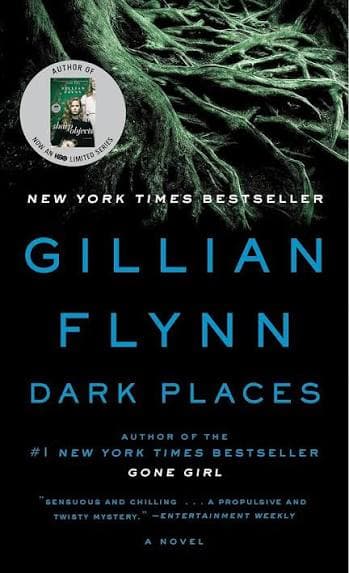

Novel: Dark Places by Gillian Flynn
Release Date:
2009
Publisher:
Crown
Format:
eBook
Source:
Library
Libby Day was seven when her mother and two sisters were murdered in “The Satan Sacrifice of Kinnakee, Kansas.” She survived—and famously testified that her fifteen-year-old brother, Ben, was the killer. Twenty-five years later, the Kill Club—a secret society obsessed with notorious crimes—locates Libby and pumps her for details. They hope to discover proof that may free Ben.
Libby hopes to turn a profit off her tragic history: She’ll reconnect with the players from that night and report her findings to the club—for a fee. As Libby’s search takes her from shabby Missouri strip clubs to abandoned Oklahoma tourist towns, the unimaginable truth emerges, and Libby finds herself right back where she started—on the run from a killer.
Why I Picked It Up
I’ve been reading thrillers as a genre for essentially the first time. Stemming likely from Liz Moore’s The God of the Woods over the summer—into Long Bright River, which then led me to Gillian Flynn—I’m tackling some airport-style popular picks I’ve never gotten around to. (Ex: I’ve never read Frieda McFadden, Colleen Hoover, Tana French, etc.) Usually, I guess the plot twist, which is just a side effect of having consumed so many books across genres for my entire life, so I have to be equally invested in the how from a writer.
About the Book
The book focuses on Libby, the survivor of a mass killing event when she was seven, a series of murders performed by her older brother. She’s finally running out of money from the modern equivalent of the GoFundMes, and has no desire to get a job. (Characterization-wise, Gillian Flynn does a great job showing her executive dysfunction presumably being a result of trauma—she’ll do something like not pay her gas bill for two months, but it’s very clearly because she’s so dissociated from reality, not because she’s lazy.) Instead, she finds an offer from a true crime fan group to pay her to ask her some questions about that night, which she accepts.
I have a voice note I recorded for this book after finishing it in which I talk about how one of the aspects of this book that struck me most was the burgeoning ickiness of true crime purveyors, and how they approach victims of horrific events. Gillian Flynn was a little ahead of her time on this one; in the 2000s, you of course had the vulture-like paparazzi and tabloid digs, but true crime’s sensationalism has also exploded and warped some because of the rise of short-form video and the attention economy; nowadays, true crime fans are recording theory videos, scouring the Internet for their own evidence, and presumably being even worse.
The idea definitely makes me shiver, and the book handles the disorientation of encountering the true crime fans—women who wrote her brother, who look at her like a vehicle for delivering his innocence, who critique the validity of her testimony as a child. It’s gross! And for that reason, Gillian Flynn handles it brilliantly. (She’s very good with gross.)
Still, meeting with them does inspire Libby to poke into some holes from that night, which then leads to more unraveling, and then to more.
The book then flashes back to two other perspectives which build to the night in question near the end of the book—her brother, on that day, and her mom, on that day. Each of them dredge up enough red herrings, directions, etc. that I genuinely had no idea how the night’s murders would be resolved.
Characters & Tone
Now, Gillian Flynn is excellent at ugly details, which is something I point out in my review of Sharp Objects. She picks unpleasant, ungenerous details to spotlight from both people and their surroundings—atmospheric, yes, but also rather bleak. I can’t always handle bleak, but I think Flynn is fine for me on that front because the plot is active enough that I’m not meant to linger with too many details (although some can be haunting.)
The general consensus tends to be that Dark Places is her weakest book, which is to say it’s still very strong. It’s just way more heavy-handed whereas her other books can be more insidiously subtle.
Libby is not particularly likable, but also—having been through what she has, why would she be? Her characters and the plots that developed them always strike me as being psychologically sound. Libby is very chronically depressed, and also deeply cynical. The sadness of the book reminded me, mood-wise, of great YA contemporary I wish more people would talk about: Hate List by Jennifer Brown, which is about the girlfriend of a school shooter in the aftermath.
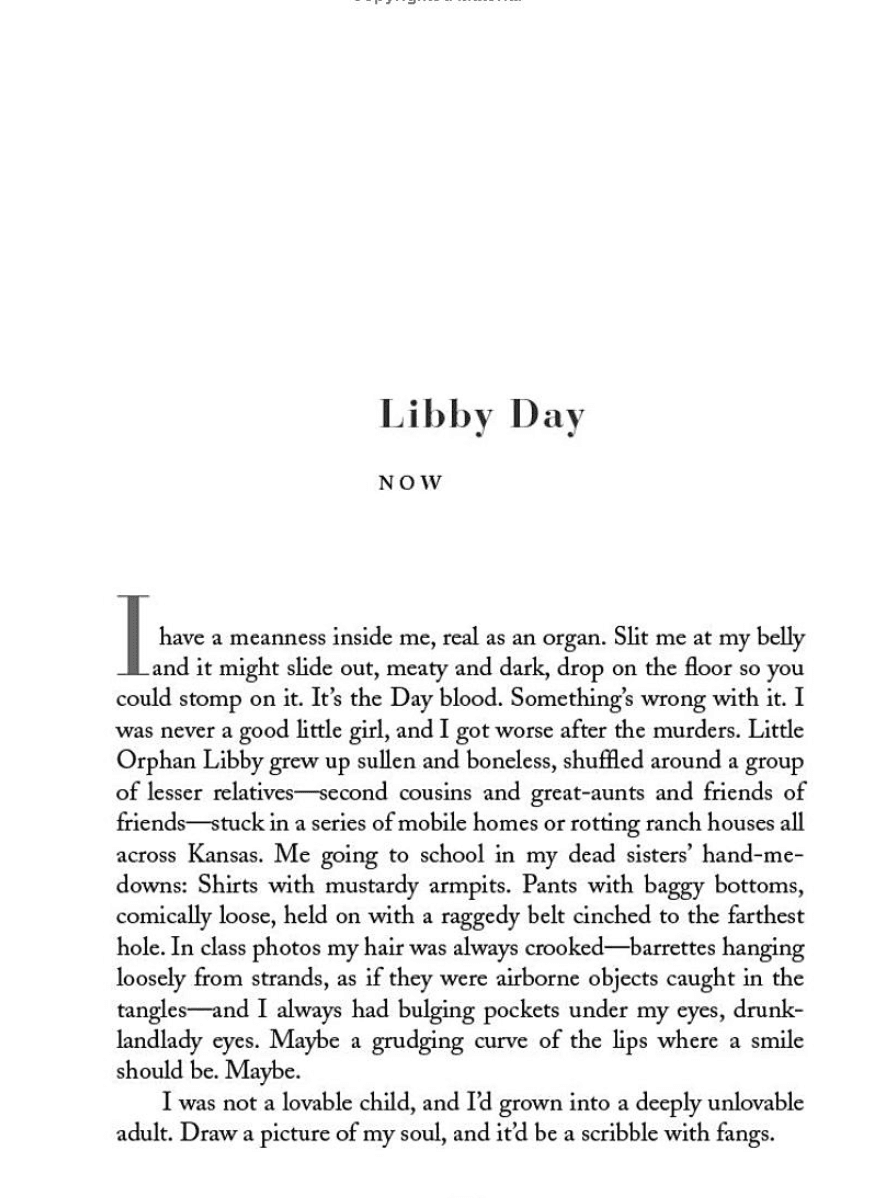
“I have a meanness inside me, real as an organ. Slit me at my belly and it might slide out, meaty and dark, drop on the floor so you could stomp on it.”
Where Dark Places loses me more than her others—and again, I think Gillian Flynn is great enough that I’m comparing her to the rest of her books, but think each of them knock it out of the park—is that you can definitely tell where the book swings for shock factor, steered some by “what’s the absolute worst or most gruesome detail I could include here?” which is generally not my favorite way of plotting.
“I'm not someone who can be depended one five days a week. Monday Tuesday Wednesday Thursday Friday? I don't even get out of bed five days in a row-I often don't remember to eat five days in a row. Reporting to a workplace, where I should need to stay for eight hours—eight big hours outside my home—was unfeasible.”
“It never takes much for me to lose patience. The phrase 'fuck you' may not rest on the tip of my tongue, but it’s near. Midtongue.”
Some aspects of Dark Places will make you squeamish. If you’re a reader who needs to know content warnings before heading into books, I recommend you look those up. It could be gory or gross or weird, and stomach-turning is not generally a mood I prefer. In Dark Places, it did feel purposeful, although I do think Flynn’s other books handle those kinds of details more elegantly.
I love to analyze word frequency in books and how that contributes to the development of the mood in Dark Places, and it’s a great book for analyzing that diction because it’s all very harsh. (May turn into a separate post on the craft of this.)
The main characters felt hopelessly psychologically correct, but I think where Dark Places is slightly less than the wow-factor of her others is that the side characters are slightly more convenient in their motivations. There were one or two minor people who felt a bit more cartoonish or shoehorned for plot in that I didn’t think their actions made enough sense—and acted a certain way because the plot needed them to—but I still enjoyed it overall. It’s likely messier than her other books, but that’s because her other books are cohesive enough to make it on “best thrillers of the century” lists. Gillian Flynn really is a trailblazer in the genre, and her books are pillars.
Overall Thoughts
There’s a lot to mull over in Dark Places, and it’s a book that’ll have you flipping pages to find out how it all comes together. I liked the sliced perspectives, and thought it really worked for this type of plot—definitely energetic. What I want from a thriller is exactly that: to not be able to put it down until I know what’s happened.
I especially loved the brother’s perspective because it had me constantly guessing, and Flynn cut off at high-tension moments without feeling like a bait-and-switch. The plotting felt punctuated, and I personally loved the way it all came together in the end.
If you’ll get squeamish, I’d recommend one of her others instead, but I tend to balk at details that get too ugly and Dark Places was okay for me on that front; in comparison to Flynn’s other books, some details felt more gratuitous, but not in comparison to other fiction. This one grapples more with elements like true crime voyeurs, Satanic panic, general inability to function as an adult, etc. It’s much more heavy-handed than her other books, which could go either way.