If I Stay by Gayle Forman
A poignant story of a girl stuck between life and death when a car crash kills the rest of her family.
Published November 5, 2026


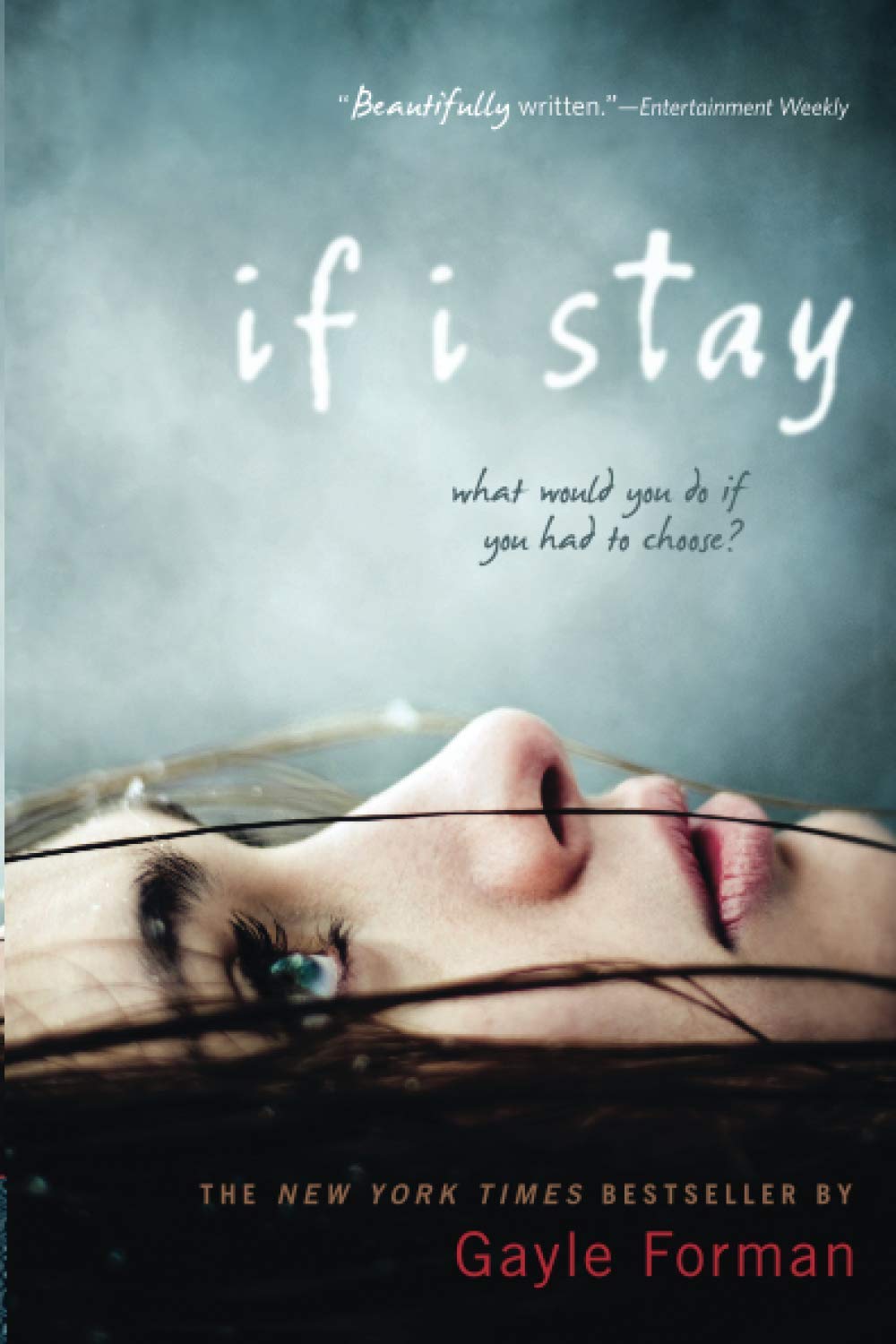

Novel: If I Stay by Gayle Forman
Release Date:
2009
Publisher:
Speak
Format:
eBook
Source:
Library
Mia had everything: a loving family, a gorgeous, adoring boyfriend, and a bright future full of music and full of choices. Then, in an instant, almost all of that is taken from her. Caught between life and death, between a happy past and an unknowable future, Mia spends one critical day contemplating the only decision she has left—the most important decision she’ll ever make. Simultaneously tragic and hopeful, this is a romantic, riveting, and ultimately uplifting story about memory, music, living, dying, loving.
Why I Picked It Up
Like many, I read Gayle Forman's If I Stay as a teen; I vividly remember seeing the movie in theaters with a friend. In adulthood, I've appreciated the rest of her oeuvre: Just One Day, I Was Here, I Have Lost My Way, etc. and find a lot of the conversation around her more subtle books to be lacking; I think they're stunning.
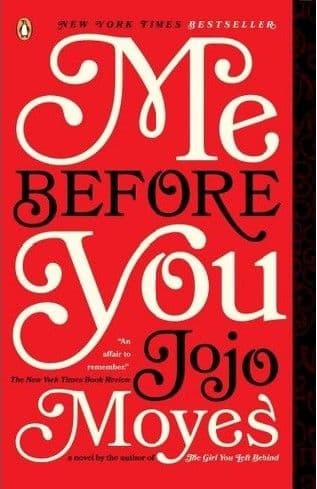
After discussing Jojo Moyes's Me Before You with a friend, I was thinking about the stripe of loss-centric books around this period. Both adaptations released around 2013—peaking with the film adaptation of John Green's The Fault in Our Stars in 2014—before audiences became fatigued and started discussing whether the poignancy of these stories were maudlin. Bonus: the movie soundtrack has some songs I genuinely enjoy listening to.
Recently, I revisited a few of these: grief narratives, cathartic cry-types. Gayle Forman is excellent at conveying transformation through the mundane—especially depicting magnanimous internal changes invisible to those on the outskirts.
About the Book
If I Stay is honest and clear. The book centers on Mia in a mystery purgatory of sorts (similar to Lauren Oliver's Before I Fall), deciding whether to "depart" with the rest of her family or fight to live in the ICU, surrounded by family, friends, and her complicated boyfriend, Adam. In the process of deciding, she flashes back through first love, her family's origin story, and her lifelong dream of going to Julliard to pursue her talent as a celloist.
It's an emotional book, starting with the car crash and gradually building out those involved. Gayle Forman's author note in which she talks about the loss that inspired this one always makes me want to cry. She had friends who passed in a similar incident, and the reference chokes me up.
A bit of a full circle moment too: my first legitimate author event was being on stage at YALLWEST for the closing ceremony, participating in audience games beside Gayle Forman. If my teen self could see me now!
Pacing & Impact
If I Stay feels teenage and simple in the insta-love. It’s pared down overall in a way that I miss. Right now, a lot of contemporary (or, like this, vaguely speculative) feels either flat to me or wildly high-concept; I feel like I can instantly tonally recognize any YA from about 2022 onwards. And that’s not to say I don’t really like or love what’s released now, but that I think the quiet feel of certain books is partly what makes them impactful, and I worry about losing that.
A small note, but I’ve been studying vocabulary for the GRE, and a lot of people will say read Frankenstein. But If I Stay immediately caught my attention for being unafraid to use complicated words, which was something I wouldn't have noticed as notable as a teenager.
The writing is straightforward enough to make it a relatively easy read while still having exposure to more complexity. Similarly to my notes on writing and reading “older YA,” I’m painfully aware that we’ve made more of an effort to meet kids where they are vs. using words they might not know. My take is to use those words anyway; you learn a lot from context and osmosis, and I like to look up words I don’t know. "Use it or lose it."
Themes
A decade later, I've also picked up on a theme that hadn't been significant to me before: how tempted we are to sort people and events into easily defined groups, when people can and should be multiple things. It’s hard to hold two truths at once, but worthwhile, and although that might feel like a moderately simple insight—more people could use it.
Mia deals with this first when stereotyping Adam, her later boyfriend, into being a punk-rocker while she's a quiet, bookish cello player. Later, when grappling with the grief of family loss, she's relieved when her grandfather acknowledges the depth of her loss (while she's in a coma) and says he understands if she wants to let go. There's a lot of binary built into the stay/go hook, which allows Forman to dig into all the shades of gray surrounding the decision, to the extent I realized how that emphasis on gradient permeated the rest of the book.
Then personally, I also think this book depicts a world of possibility in an art scene that no longer exists, which is worth longing for myself. Mia’s parents belong to a scene of band members and gig workers who can provide for a child and a family, even scraping by, with hard work and cheap rent. Their social ecosystem of artists is so satisfying, and feels so far away in the modern economy. That's part of why people insist the best thing you can do for the arts/culture scene in your city is to have accessible housing and available jobs.
So much of the scene and family depicted in this book is priced out, and the joy of pursuing excellence in art and music in this book is built upon that access.
Voice & Tone
If I Stay is elegant and straightforward. It made my throat tighten. It feels nostalgic in the way you long for sitting up at your kitchen counter while a family member makes dinner, doing homework.
There's a 2027 debut, Seven Dishes Before Forever by Kate Emilee, that's a purgatory novel (set in a retro diner) I'm excited to read, but aside from that—they sort of died away because there were so many on the market in the '00s. I haven't read her book, so can't speak to the feel, but wonder if the hook was effective also for us coming up on a 20-year trend cycle in which it's been just long enough to make a purgatory novel feel fresh and unique to readers again.
I’m very, very insistent that teenage problems are not lesser problems; their lives are just as pressing and complicated as our own. But there is, I think, more ability to compartmentalize and be all-in on certain sensations (big feelings, big comfort) and the wave of that is something this book captures well.
Overall Thoughts
Recently, I’ve tried to think of the feelings I have after closing a book. Does it linger for me? Is it satisfying months later? If I Stay, while a familiar concept at this point, feels extremely whole, which is partly why it endures. (We should all read more Gayle Forman.)
I don't normally go through other blurbs for a given book, but caught on this one from The Wall Street Journal, which feels accurate:
“The brilliance of this book is the simplicity.”
As for the movie adaptation: it’s faithful. I think it’s hard to do a movie that relies on purgatory (like The Lovely Bones even) but I love the music in it. It’s a lovely movie that goes along some with bittersweet picks like The Perks of Being a Wallflower. A little corny, but that’s part of the appeal. The people who gather in the hospital to see if you’ll make it.
There are so many moments in this book that break my heart in the right way.
For fans of:
Heart the Lover by Lily King; Before I Fall by Lauren Oliver; Before I Die by Jenny Downham; Me Before You by Jojo Moyes; The Perks of Being a Wallflower by Stephen Chbosky; Elsewhere by Gabrielle Zevin; When Breath Becomes Air by Paul Kalanithi.