This Song Will Save Your Life by Leila Sales
An emotional YA about a suicidal girl finding her place in the DJ booth.
Published September 6, 2026


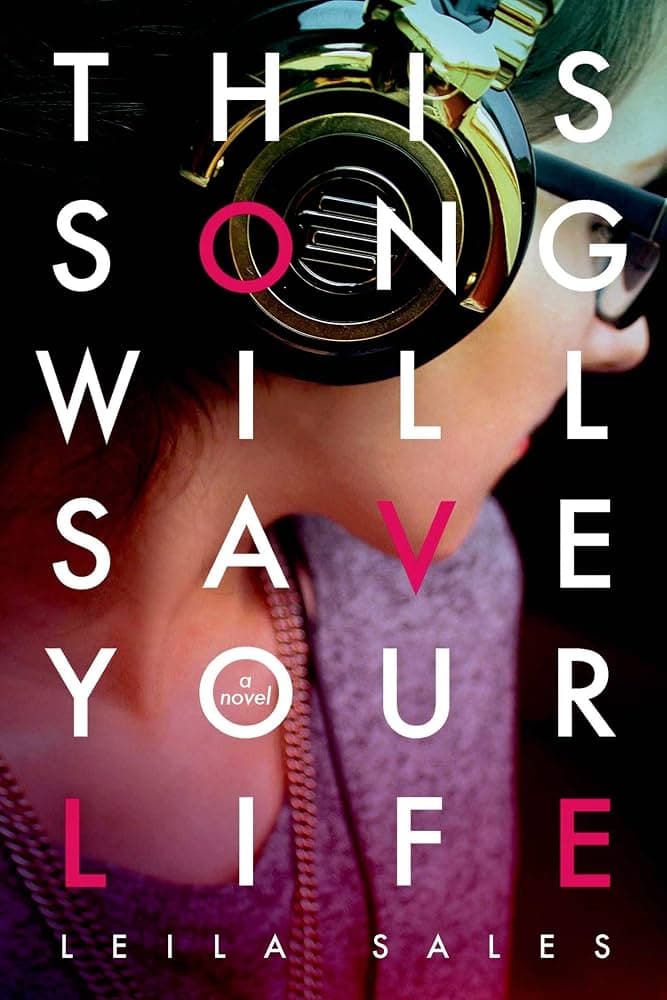

Novel: This Song Will Save Your Life by Leila Sales
Release Date: January 13, 2026
Publisher: FSG
Format: Hardcover
Source: Bought
Relevant Disclaimer
If this story sounds familiar to you, please know that you can call or text 988 within the United States for support.
Although you may not feel like you know me, please know that I am always happy to be a friend, out-of-context person, and/or someone you can trust to listen and support you no matter what you need; I hope you'll consider stumbling across this post on WLS enough connection and invitation — whether you're a book lover or a complete stranger — to reach out, as I will always be there for someone who needs it and stand by the thoughts I share below about generosity and goodness being around the corner.
Do skip this story if you worry it might provoke some concerning darkness or pointlessness. There's no shame in aligning your actions with whatever mental health framework that lets you get to tomorrow, and self-awareness can be worth more than exposure to mentalities that can create harmful urges for you; don't discount the way stories actively rely on and encourage memories, associations, and instincts.
Either way, I'm glad you're here, and here for anything this story might do for or to you; please know my offer is entirely open, genuine, and does not expire.
Making friends has never been Elise Dembowski’s strong suit. All throughout her life, she’s been the butt of every joke and the outsider in every conversation. When a final attempt at popularity fails, Elise nearly gives up. Then she stumbles upon a warehouse party where she meets Vicky, a girl in a band who accepts her; Char, a cute, yet mysterious disc jockey; Pippa, a carefree spirit from England; and most importantly, a love for DJing.
Told in a refreshingly genuine and laugh-out-loud funny voice, This Song Will Save Your Life is an exuberant novel about identity, friendship, and the power of music to bring people together.
Why I Picked It Up
I read This Song Will Save Your Life as a teenager, because I was an avid reviewer and because I thought a book about a DJ would be cool. (It was.)
I've learned, over the years, that I tend to love "love letter" books either to places or pursuits; I love characters who will make me fall for an activity or passion and feel that same euphoria. (At the time—and even now—I also resonated with the isolation said pursuits could invite, although not the darkest elements of the book.)
This book comes to mind occasionally, and deserved a spot on the blog. I'm relatively certain I picked this up the year of its release and found it powerful, colorful, stirring. Teens feeling on the outskirts may love it, along with teens into music, and teens with drive who find it hard to relate to those who don't.
About the Book
The plot centers around Elise, who's suffering at school after everyone found out about her suicide attempt. The aftermath has made her loneliness even worse. (I've registered this myself in various lonely experiences—the sense that people find your sadness contagious, exacerbating the hell of it.) Feeling that bad can be shameful, or even taboo; teenagers especially might avoid the severely depressed. She's especially mad at the popular girl she'd thought to call midway through; on one hand, her life was saved. But on the other, she's now a pariah.
One thing I think this book does particularly well is in illuminating the hell of being typecast—especially in less elastic times like high school. Once people have decided how they're going to see you or think about you, it can be hard to break past those labels.
“Sometimes people think they know you. They know a few facts about you, and they piece you together in a way that makes sense to them. And if you don't know yourself very well, you might even believe that they are right.”
Especially as a kid! There's a gut-punch in registering that you're excluded and it's because of who you are, not anything you can change, or that being the odd one out will only put a target on your back. Not even in a bullying way—just a systemic exclusion one.
“'Don't be special.' That's what I would say to my younger self if I could pinpoint the moment when I went astray. But there was no one moment. I was always astray.”
Psychologically, it's true too; a firm belief I have is that you become how people treat you, which is especially terrible when others are treating you poorly or looking straight through you. Sometimes you need a different place or circle or activity, and no amount of tweaking your personal circumstances where you are is going to be enough because people have made their decisions already.
“You think it's so easy to change yourself. You think it's so easy, but it's not. True, things don't stay the same forever: couches are replaced, boys leave, you discover a song, your body becomes forever scarred. And with each of these moments you change and change again, your true self spinning, shifting positions-- but always at last it returns to you, like a dancer on the floor. Because throughout it all, you are still, always, you: beautiful and bruised, known and unknowable. ”
Elise's particular circumstances are dark, but I'm also so—relieved?—to read about them, because her particular train of thought is so miserable and relatable in regards to the terror of always being ever-so-slightly off. She always gets too into things, or worse—people can feel her trying too hard, which then makes her try even harder. Leila Sales taps into a strain of alienation that's dizzying and terrible, but also very real, and if most people are lucky, they'll never encounter that perfect storm of escalation.
Anyway, it's been a few years since I've actually read the book, but it was memorable for me as a teenager and stays with me. Elise is wandering late one night and stumbles upon a random warehouse party and lucks inside. She discovers an underground dance club, a new vibrant social circle, the giddiness of dancing all night under the direction of the charismatic DJ, Chaz. So she starts sneaking out and building a community. Eventually, she starts to learn how to DJ, and becomes utterly obsessed. Her rise is meteoric, which comes with its own problems.
Characters & Trajectory
The book can be uncomfortable to read, beyond its suicide plotline, because Elise is not always serving herself well either. There are plenty of readers who will not like the messiness here of Elise's flaws.
It can be tempting, especially in YA which loves to moralize, to believe that anyone in such a shitty scenario is inherently undeserving of all the hell that comes their way. Elise has some blind spots, and does hurt other people, but you also have to understand that she's so desperate that she's not thinking straight—real. But that means there are certain scenes that are hard to read in a self-sabotage way, especially when dealing with her family. She can also be judgmental or self-indulgent.
Elise's arc is great throughout the book, but not blameless—which is also good to read. Being miserable doesn't entitle you to lash out or be selfish or to be validated in every feeling, but of course you need to get someone out of the darkness too. It's a tough balance for many to strike, and This Song Will Save Your Life is overall balanced in a way that's likely a good introduction to this kind of scenario for any teens who are unfamiliar. Whether it's you or somebody else, there's a good chance that in your lifetime, you will have to learn how to handle a family member or friend who is severely depressed in a dangerous way.
I've also been the person on the other end of a suicidal phone call before, and it's a lot to shoulder—the who to call, the what to do, the guilt and worry about making things worse for them in knowing their aftermath will be hard if the story gets beyond you. (Not fun, but it's absolutely worth escalating that circumstance to authorities/others every time.) So I appreciated Sales's exploration of the impact on [girl whose name I can't remember.]
The Tenderness of DJing
Leila Sales really does such a beautiful job sharing the love of Elise's discovery of DJing. Her scenes of euphoria and flow and giddiness really make the book, and the effect—of getting swept into the granular details of the shifts and improvements and obsession and flow—is bittersweet. Sometimes, someone just needs one thing to cling to.
It's also tribute to welcoming spaces and the ways in which we don't always let others be themselves in our "usual" environments. (There's no queer element to This Song Will Save Your Life, but I have the feeling many will find parallels.)
DJing has never particularly struck my fancy—with the exception of someone handing me the aux—but the love and affection and determination of Elise towards DJing specifically is absolutely contagious to read. It couples what would otherwise be very heavy and dark with the slices of pleasure and meaning and hope that allow her to start getting up every day looking for the way out.
Overall Thoughts
The main reason I love this book is for its depiction of falling in love with a hobby or pursuit; Elise's burgeoning passion for DJing is so addictive and wonderful to read.
The value of this book, I think, is in how it builds out an escape for a deeply lonely teenager who sees no way out and thinks she can't change that she's unlovable. I think the transformation of that radiating other-ness and negative feedback loop (isolating because of such a deep depression, which then makes you lonelier then isolate further) is worth depicting, even if it's dark to read at times. Elise is not always easy to root for either, but she also doesn't need to be to deserve better than her circumstances. The climax is tricky, of course. There's still a deep, dark pit to crawl out of. Like in Saving Francesca, depression doesn't excuse the sufferer from consequences.
There are enough teens for whom this book will entirely click that it's worth having on your radar, because it's not an issue book (solely about self-harm) the way these moody YA contemporaries tend to be; its hobbyist emphasis makes it more of an ecosystem that turns it into a more dimensional coming-of-age.
And then, of course, there's a Perks of Being a Wallflower-esque teenage resonance built in: the sense of being on the cusp of everything even as it's dark or painful. (Late night, streetlit, sweat dried, desperation.) It's a grand feeling, and the book works hard to make those moments feel earned.
Again—This Song Will Save Your Life isn't for everyone, especially if susceptible to landing in these kinds of lows if reading a book evoking them, but it's necessary. It may be colorful, or thought-provoking, or cathartic. Definitely powerful.
For fans of:
Exit, Pursued by a Bear by E. Lockhart; Before I Fall by Lauren Oliver; Euphoria (TV); David Levithan; The Beginning of Everything by Robyn Schneider; The Perks of Being a Wallflower by Stephen Chbosky; Someone Great (movie); Looking for Alaska by John Green; Hate List by Jennifer Brown; We Are Okay by Nina LaCour; Anatomy of a Misfit by Andrea Cortes.


