Meander, Spiral, Explode by Jane Alison
A craft book that attempts to peer beyond structured Western storytelling methods.
Published July 21, 2026


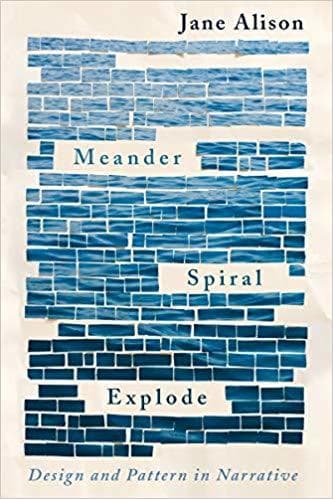

Book: Meander, Spiral, Explode: Design and Pattern in Narrative by Jane Alison
Release Date:
2019
Publisher:
Catapult
Format:
Paperback
Source:
Bought
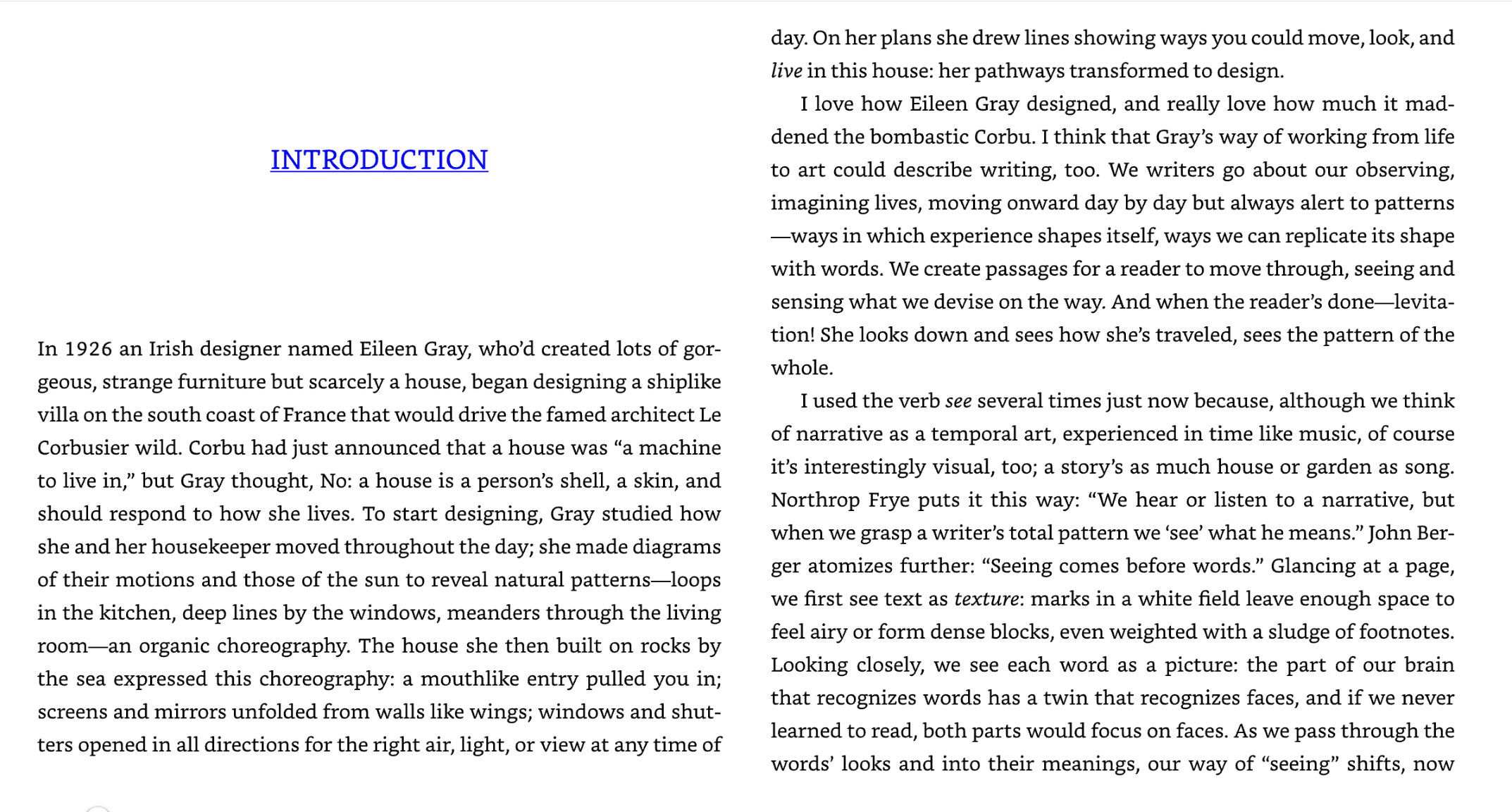
As Jane Alison writes in the introduction to her insightful and appealing book about the craft of writing: “For centuries there’s been one path through fiction we’re most likely to travel― one we’re actually told to follow―and that’s the dramatic arc: a situation arises, grows tense, reaches a peak, subsides . . . But something that swells and tautens until climax, then collapses? Bit masculosexual, no? So many other patterns run through nature, tracing other deep motions in life. Why not draw on them, too?"
W. G. Sebald’s
Emigrants was the first novel to show Alison how forward momentum can be created by way of pattern, rather than the traditional arc--or, in nature, wave. Other writers of nonlinear prose considered in her “museum of specimens” include Nicholson Baker, Anne Carson, Marguerite Duras, Gabriel García Márquez, Jamaica Kincaid, Clarice Lispector, Susan Minot, David Mitchell, Caryl Phillips, and Mary Robison.
Meander, Spiral, Explode is a singular and brilliant elucidation of literary strategies that also brings high spirits and wit to its original conclusions. It is a liberating manifesto that says, Let’s leave the outdated modes behind and, in thinking of new modes, bring feeling back to experimentation. It will appeal to serious readers and writers alike.
Why I Picked It Up
When I read (and reviewed) this one last fall, I'd been eyeing John Steinbeck's Journal of a Novel: The East of Eden Letters. I was in a down period of having gotten through [redacted book process] already but not yet being able to go into sprint mode to address everything I needed to do over the next few years. Reading craft books was a way to address that gap.
This one was a total impulse buy in Barnes & Noble's Creative Writing section during an online sale, and I figure reading about non-traditional narrative patterns will only ever benefit me; I try to always consciously look for and address blind spots both in my writing and life, which is why I love reading about unconscious influences, the science of sparking breakthroughs, etc.
I personally think a lot about this concept of cross-training my creativity. Although I'm primarily a novelist, I love to study poetry and read short stories and analyze advertising campaigns and comb through studies, as all writing across media can help you improve yours. I frequently talk about "form following function" in my writing, and appreciate when media matches the messaging. So Meander, Spiral, Explode seemed up my alley.
About the Book
I read Meander, Spiral, Explode up at the bar after working a restaurant shift last fall, and finished it by the time the night shift was closing up. I'd been expecting a more unconventional approach, but Meander, Spiral, Explode didn't really seem to venture beyond any POVs or examples I hadn't already considered.
I don't think pursuing an MFA is in the cards for me in my lifetime (unless I change what I'd like in my career structure a decade from now), but I did enjoy the feeling of a book that reminded me of some of the seminars I was lucky enough to take as a teenager or college student—in which we did comb through excerpts and stories in a more academic way.
I liked and appreciated it, but I didn't end up forming much of an opinion. In fact, the only reason I'm reviewing it is that I've vowed to myself to start actually typing up the many, many book notes I have scattered through the last years of notebooks; I have at least fifty reviews that haven't made it to the blog.
Not groundbreaking, but perfectly nice.
My Overall Thoughts
It's clear while reading Meander, Spiral, Explode that the author is smart and intentional. I love a poetic stance emphasizing the musicality of language and why we should care about writing on a line and image level. It makes complete and utter sense to me that Alison is a professor at UVA; her approaches and explanations were clear and engaging, and I'd gladly take her 8 A.M. to listen to a seminar.
I did appreciate her championing the development of taste in one's creativity i.e. I loved the conversation about mirroring.
So much of any craft discussion—especially in classifications like literary fiction or the Great Books, etc.—boil down to what of any given execution you believe is intentional on the part of the writer, as well as a sense of rhythm and instinct you only cultivate by reading a whole lot. Whether you view some pacing as mapped into fractals or simply unconsidered depends on what you know about the author and whether or not you feel hooked enough to consider it effective.
Meander, Spiral, Explode could also occasionally get so abstract that it could feel unnecessarily convoluted in a "sometimes the curtains are just blue" way. Writing clear and hard à la Hemingway is also a skill. The difference between spiral and fractal narrative may have gone over my head some—whittled down finely enough to the point of being generally irrelevant or diluted. Some of it was "too much" for me, and I'm pretty open to hearing about unusual creative processes or bits of flair.
I liked reading some examples of unconventional plotting methods, and it's a book that can expand one's horizons in terms of literary analysis. Since I already felt I'd addressed a good bit of this in my research and work, it didn't add too much for me and is more so about the specific examples that it uses, which may feel too narrow for some. I bought a copy, but would recommend most readers check it out from the library first to determine whether the style suits what is most helpful to them.
For fans of:
A Swim in a Pond in the Rain by George Saunders; Refuse to Be Done by Matt Bell; Novelist as a Vocation by Haruki Murakami; Writing Deep Scenesby Jordan Rosenfeld and Martha Alderson; The Science of Storytellingby Will Storr; and Journal of a Novel by John Steinbeck.